The concept of giving is given the utmost importance in Hindu religion and is practised in three ways: Daan, Dakshina, and Bhiksha. Dakshina is repayment, often for services such as education or guidance, while Bhiksha refers to alms, traditionally sought in ancient times for humility and spiritual growth. Daan stands apart because it is selfless charity, performed from a pure and sincere heart.
The Sanskrit word Daan itself means “to give.” Charity can be performed in many ways, from offering food (anna), clothes (vastra), land (bhoo), and cows (gau), to even knowledge (vidya) and medicine (aushadhi). In modern times, with changing needs, what matters is not what is given, but the intention behind the act. Charity is not meant for boasting or for expecting repayment, but simply to help those in need, nurturing humility and detachment from worldly possessions.
Across India, thousands of widows reside in ashrams, separated from their families and living with limited resources. Offering Daan to widow ashrams is therefore one of the highest forms of service, as it is not just conventional charity but an act that provides care and dignity.
In this blog, we explore the three major forms of giving for widow ashram charity, to present this act as a thoughtful and meaningful practice grounded in tradition and humanity.
Understanding Life in Widow Ashrams
Widow ashrams are set up to offer shelter to women who have lost their husbands and, in some instances, their social standing as well. Many of the women who live in these ashrams are elderly. Some arrive after being abandoned by their families, while others come because they have no other means of survival in society.
Life in widow ashrams is marked by simplicity and restraint. Meals are modest, clothing is basic and often donated, and medical assistance is frequently required. Widow ashram charity becomes important not only because it meets material needs, but also because it restores dignity and visibility. When people engage in Daan to widow ashrams, they recognise these women as human beings who deserve care, not as invisible figures on the fringes of society.
A single act of widow ashram donation may seem small to the donor, but for someone living in scarcity, it can be the difference between comfort and illness, and a powerful source of reassurance.
The Three Sacred Forms of Daan
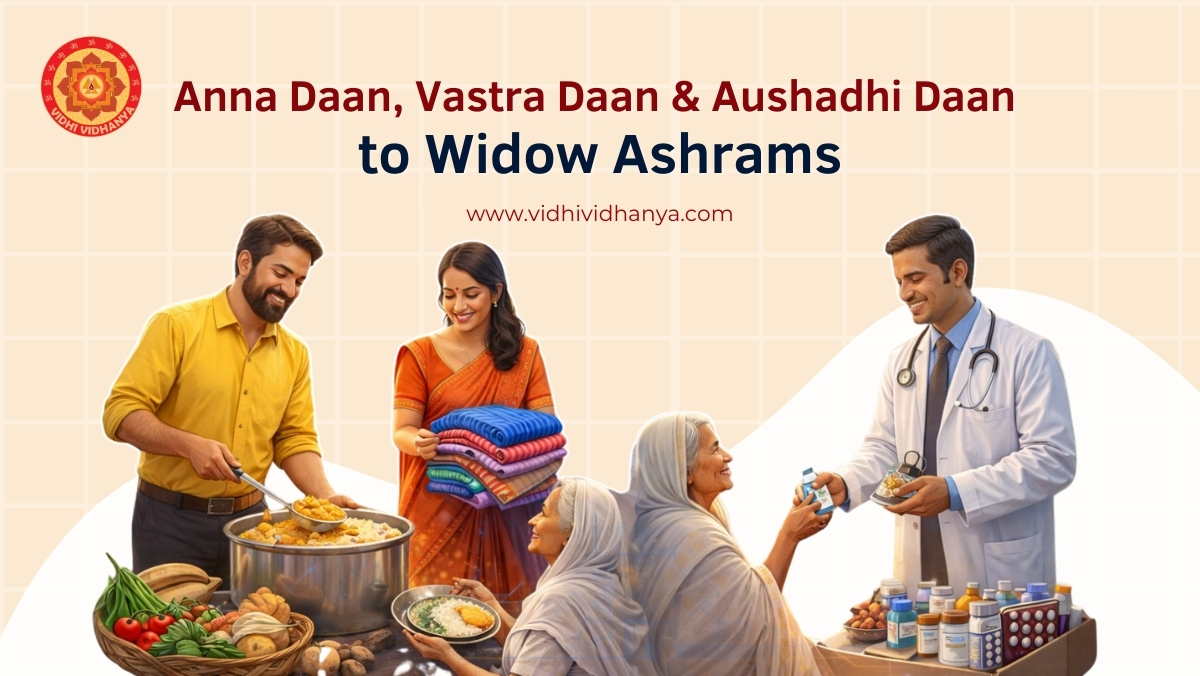
Anna Daan: Nourishment as Care
Food is the foundation of life. In communal spaces such as widow ashrams, food is not only a means of sustenance but also brings rhythm and structure to daily living. A healthy meal becomes a daily anchor.
Through Daan to widow ashrams, Anna Daan provides nourishment that supports health, strength, and stability. It is a way of saying, “You are cared for.” Spiritually, feeding another being is considered the highest service, as hunger is a universal human experience. In this way, Anna Daan forms the heart of widow ashram charity.
Vastra Daan: Clothing as Dignity
Clothing offers more than protection from the elements. It represents identity, warmth, and self-respect. In widow ashrams, garments are often limited in number, worn repeatedly, repaired, and shared.
Vastra Daan provides comfort in tangible form. A clean sari, undergarments, or a warm shawl brings both physical relief and emotional upliftment. Within widow ashram charity, clothing becomes a quiet way to restore dignity without words, reinforcing the deeper purpose of Daan to widow ashrams.
Aushadhi Daan: Health as Compassion
Many women in widow ashrams suffer from age-related ailments, chronic pain, or untreated conditions. Medicines, supplements, and basic health products are not always accessible.
Aushadhi Daan ensures that health is not overlooked. It reminds us that care is about more than survival. Through widow ashram donation, access to medicines becomes an act of kindness, allowing women to live with greater comfort and ease.
Together, these three forms of daan address the most essential needs: food, warmth, and health.
Although the intention behind giving is noble, arranging support for widow ashrams can be complex. It requires understanding real needs, coordinating with ashrams, and ensuring delivery with dignity. Vidhi Vidhanya assists individuals and families in organising widow ashram donation through a trained and qualified team. Their role is to bridge devotion with action and ensure that Daan to widow ashrams reaches the right place in the right form.
Why Thoughtful Giving Matters
Not all donations create impact. A symbolic offering may satisfy the giver, but meaningful support transforms lives.
Widow ashram charity begins with awareness. What is needed? When is it needed? How can it be offered without disruption?
Consistency matters more than magnitude. One large donation may help for a day, but regular giving sustains lives. Respect matters more than recognition. True Daan to widow ashrams is quiet. It does not seek attention; it seeks relevance.
When giving is guided by awareness, it becomes a connection rather than an obligation.
When and How to Offer Daan
There is no single “right” moment for widow ashram donation. Some choose sacred days, birthdays, anniversaries, or memorial dates. Others give during festivals or personal milestones.
Devotees may offer widow ashram charity annually, monthly, or quarterly. What matters is not frequency or scale, but intention. Even small acts of Daan to widow ashrams, when done regularly, create lasting change.
Whether done individually or collectively, widow ashram donation gains meaning when it aligns with real needs and real lives.
Conclusion
Anna Daan, Vastra Daan, and Aushadhi Daan are not merely acts of generosity. They are acts of recognition. They affirm that every life deserves nourishment, comfort, and care.
Daan to widow ashrams is about restoring dignity where it has quietly eroded. It ensures that women who have given much to life are not left unsupported in its later chapters.
For those who wish to participate in widow ashram donation but feel unsure where to begin, Vidhi Vidhanya offers guidance through a trained and qualified team. They help transform intention into meaningful action, ensuring that widow ashram charity is carried out with sensitivity, relevance, and respect.
FAQ
What is Anna Daan in the context of widow ashrams?
Anna Daan means nourishing others with food—providing meals or staples to widows in ashrams to support health, dignity, and daily rhythm.
What is Vastra Daan and why is it important?
Vastra Daan is donating clothes. It restores warmth, modesty, and self-respect by ensuring widows have clean, appropriate garments.
What is Aushadhi Daan?
Aushadhi Daan is donating medicines and health-related essentials, ensuring access to treatment and comfort for age-related or chronic conditions.
How do I start giving to widow ashrams?
Begin by assessing needs, then coordinate with a reputable ashram or a facilitator (like Vidhi Vidhanya) to ensure proper form, quantity, and delivery.
What should I consider before donating?
Consider the real needs, maintain respectful delivery, ensure regularity if possible, and prioritize giving with humility, not for show.
How often should donations be made?
Regular, sustainable giving—monthly or quarterly—often matters more than one large, infrequent gift.
How do I choose appropriate items (food, clothing, medicine)?
Align with the ashram’s guidelines and needs; choose safe, clean, age-appropriate items; consult the coordinating team for specifics.
What role does Vidhi Vidhanya play?
Vidhi Vidhanya helps plan, coordinate, and execute widow ashram donations—matching intention with action through trained assistance.
Is there a way to donate without visiting the ashram?
Yes. Cash contributions, online donations of specific items, or arranged deliveries through a trusted intermediary are common options.