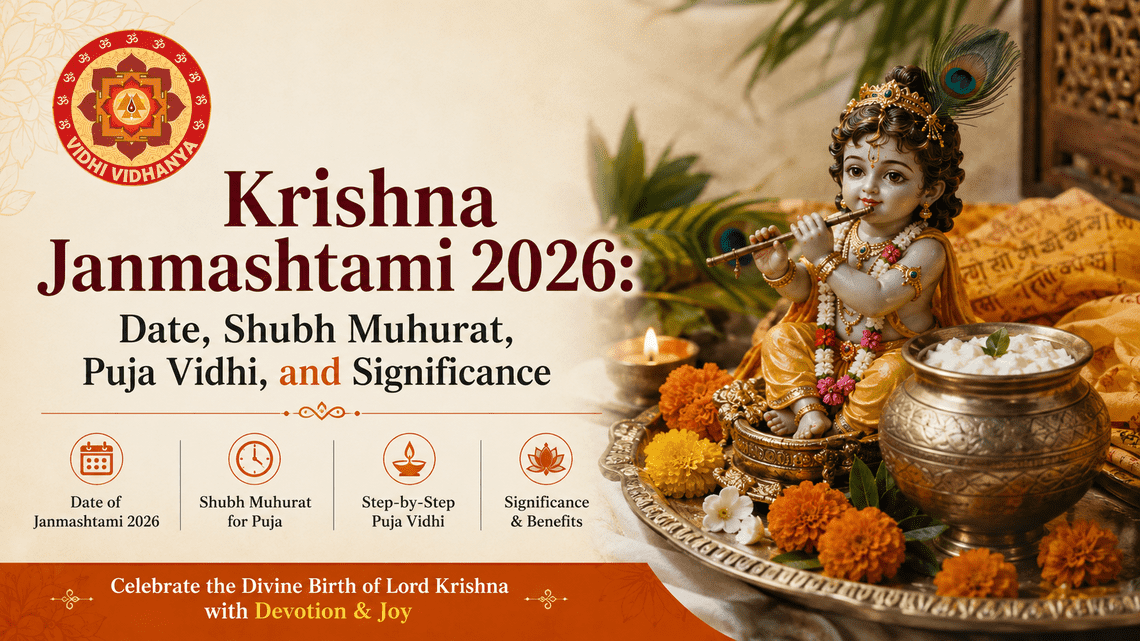
Janmashtami isn’t another festival; it’s the sacred night when Lord Krishna, the eighth avatar of Lord Vishnu, was born in Mathura. The occasion symbolises the victory of good over evil, joy over sorrow, and love over hatred. To truly embrace its spiritual depth, following the right rituals and timings is essential. Think of it like baking a cake; you could rush it, but following the perfect recipe makes it divine.
The Spiritual Significance of Janmashtami

Lord Krishna’s birth story is nothing short of magical. Born in a prison cell at midnight, his arrival was accompanied by miracles that ensured his safety. Beyond the mythology, Janmashtami stands for hope, divine love, and the eternal bond between God and devotee. Every ritual mirrors an aspect of Krishna’s life, from his love for butter to his enchanting flute melodies.
Preparing for Janmashtami
Just like you wouldn’t welcome a guest without tidying your home, preparing for Janmashtami begins with cleansing your surroundings and heart.

- Cleaning and Purifying the Home– Sweep, mop, and sprinkle holy Ganga water to spiritually purify your space.
- Setting up the Puja Altar– Place a clean cloth, fresh flowers, incense, and Krishna’s idol at the centre.
- Selecting Krishna Idols and Decorations– Choose an idol that resonates with your devotion. Child Krishna (Laddu Gopal) is the most popular choice.
Essential Puja Items You’ll Need

- Fresh flowers (marigold, jasmine)
- Incense sticks and diya (lamp)
- Holy water (Ganga jal)
- Panchamrit (milk, curd, honey, ghee, sugar)
- Fruits and sweets
- Flute, peacock feather, and butter pot for decoration
Fasting Rituals for Janmashtami
- Nirjala Fast– No food or water until midnight.
- Phalahar Fast– Only fruits, milk, and water are allowed.
- Partial Fast– Light sattvic meals during the day.
Always break the fast after midnight rituals, beginning with Panchamrit.
Muhurat for Janmashtami 2025
The most sacred period is Nishita Kaal, the exact midnight window when Krishna was born.
Nishita Kaal for 2025 (August 16th): 12:04 A.M – 12:47 A.M (check your local calendar for accuracy). Following the right muhurat ensures your prayers align with the cosmic energy of the night.
The Complete Guide to Performing Janmashtami Puja

Janmashtami, the divine celebration of Lord Krishna’s birth, is one of the most vibrant and spiritually uplifting festivals in Hindu tradition. It’s more than a ritual; it’s a day to immerse in devotion, purity, and joy. Whether celebrated at home or in temples, every step of the puja holds deep symbolic meaning, connecting devotees to the divine leela of Krishna.
Morning Rituals Inviting Purity and Positivity

The Janmashtami day begins with a sacred bath, symbolising the cleansing of the body and soul. Devotees wear clean, preferably new clothes before beginning the Abhisheka (bathing of the idol) with Panchamrit, a blend of milk, curd, honey, ghee, and sugar. This ritual signifies offering the five purest substances to the deity. Dressing Krishna in new attire and adorning Him with ornaments stands for joy and festivity. Fresh flowers and incense are then offered, filling the atmosphere with fragrance and devotion.
Afternoon Preparations Offering with Love
Afternoons are dedicated to preparing bhog, particularly butter-based sweets, as butter (makhan) is Krishna’s favourite. Singing bhajans and reading from the Bhagavad Gita or Krishna Leela helps devotees stay spiritually connected while waiting for the midnight celebration.
Midnight Celebrations the Divine Hour

The heart of Janmashtami lies in the midnight Nishita Kaal, believed to be the exact moment of Krishna’s birth. As the clock strikes twelve, bells are rung, conches are blown, and aarti is performed. Devotees gently swing Krishna’s cradle (Jhulan) while chanting Hare Krishna, Hare Rama, creating an atmosphere of bliss and reverence.
Traditions, Decorations, and Modern Celebrations
1. Traditional Bhog Offerings
- Makhan Mishri– Fresh butter mixed with rock sugar.
- Panchamrit– Sacred combination of milk, curd, honey, ghee, and sugar.
- Kheer, Ladoo, and Halwa– Served as prasadam to devotees.
Each dish is a symbol, sweetness stands for love, and purity reflects devotion.
2. Decorating the Temple and Home
- Floral Garlands– Marigold, roses, and jasmine to honour Krishna’s beauty.
- Lighting & Rangoli– Diya, fairy lights, and colourful patterns to invite positivity.
- Jhanki – Creative representation of the early years of Krishna in Gokul, using props and characters.
3. Cultural Festivities
Communities put on Ras Leela performances to act out Krishna’s wonderful stories, while group singing keeps the fun going all night. Learning becomes enjoyable for kids when they dress up as Krishna or Radha, play Dahi Handi activities, and hear stories about Krishna.
4. Celebrating Virtually
For those unable to visit temples, online live darshan sessions, digital bhajans, and devotional social media posts help stay connected to the global Krishna community.
5. Common Mistakes to Avoid During Janmashtami
- Performing rituals outside the muhurat(auspicious time).
- Consuming onion, garlic, or non-vegetarian food.
- Neglecting cleanliness in the puja space and offerings.
Conclusion
Janmashtami is more than a date on the calendar; it’s an opportunity to experience divine love, discipline, and joy. By following the right rituals and timings, you invite Krishna’s blessings into your life, not just for a night, but forever.
FAQs
- What is the best time to perform Janmashtami puja?
During Nishita Kaal, the midnight period of Krishna’s birth. - Can I drink water while fasting on Janmashtami?
Yes, if you are on a Phalahar fast, but Nirjala fast means no water. - What should I avoid on Janmashtami day?
Avoid non-veg, alcohol, and tamasic food like onion and garlic. - Can I celebrate Janmashtami without fasting?
Yes, devotion matters more than fasting, though fasting is recommended. - How can I involve children in Janmashtami rituals?
Through dress-ups, storytelling, bhajans, and playful activities like Dahi Handi.